

Aluminum Egg Crate Grilles: 90° Straight vs. 45° Angled Cores
GuidesPublished Updated
Look up through a straight egg crate grille and you may see the duct, wiring or hangers above it. That sightline matters more over a restaurant table than above a stockroom aisle. A 45° core changes what a person can see from below.
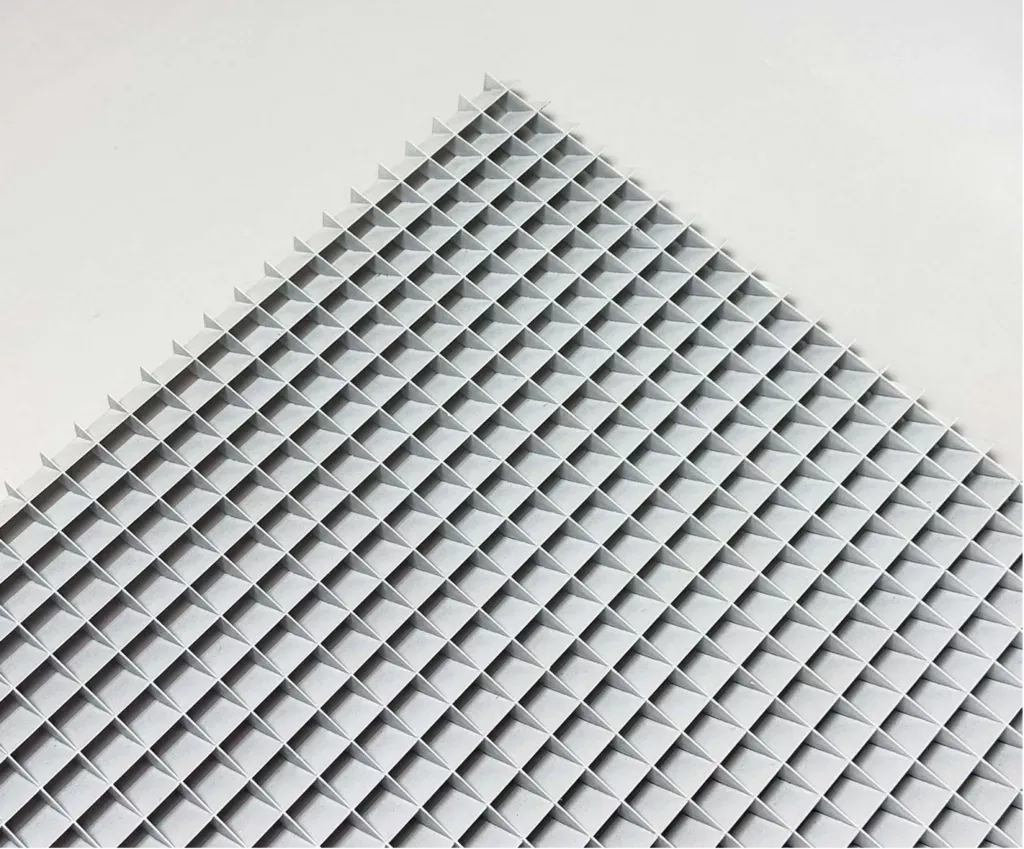
The open square grid suits many return and exhaust openings. First choose the view you want from the room, then check the selected grille’s pressure drop and sound data at the scheduled airflow.
How the core is built affects fit and paint adhesion
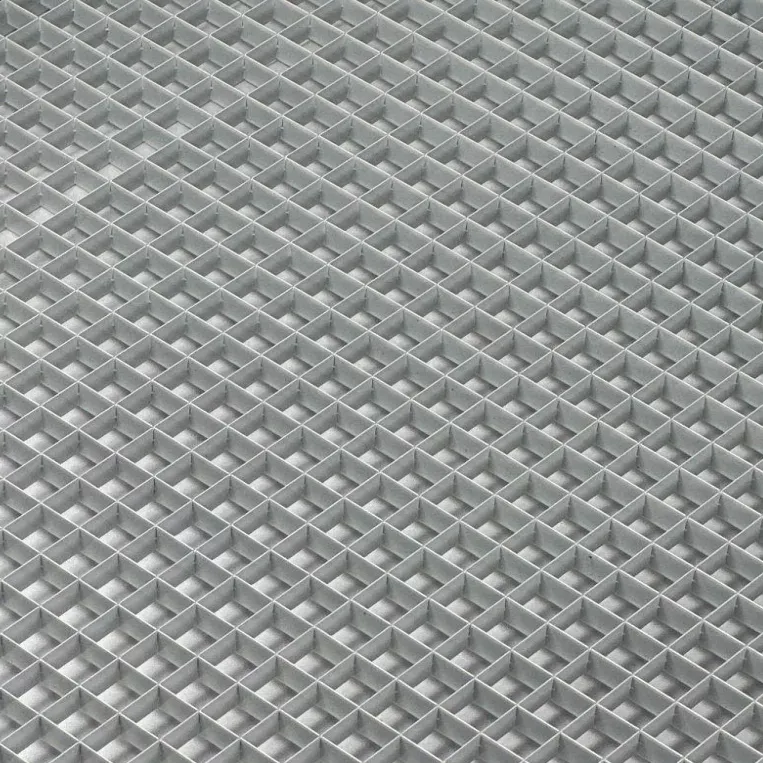
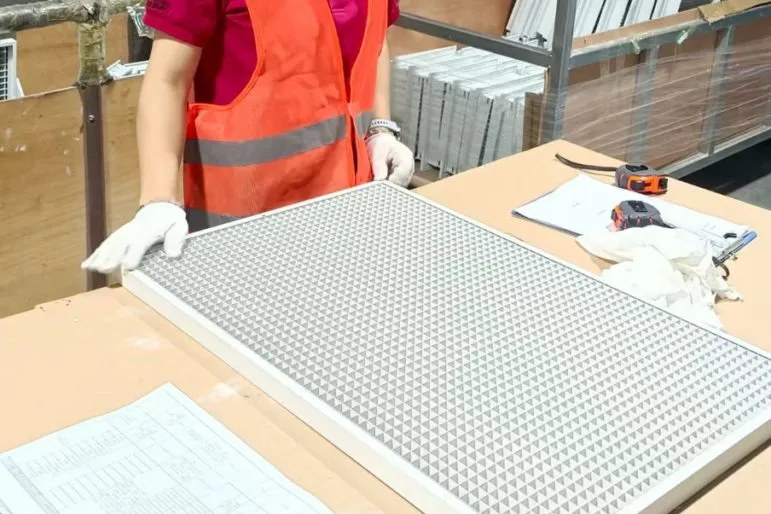
From a few feet away, most aluminum egg crate cores look alike. Installers notice the difference when a loosely notched sheet twists while being fitted into a custom frame, or when strips with play at the joints begin to buzz under high exhaust airspeeds.
In Jianpin's production line, upper and lower aluminum strips are cross-woven and pressed tightly together so the notches lock mechanically. That helps keep the panel flat and holds blade alignment true at 0° or 45°.
Cleaning before finishing is just as easy to overlook. Cutting and slotting leave machining oil on bare aluminum strips. If oil is not degreased off the metal prior to coating, powder coat loses adhesion and starts peeling along the cell edges. Cores need to leave pretreatment dry and oil-free before paint touches them.
When to step up to a 45° angled core
A straight 90° core leaves a direct view through the grid. Where the plenum is dark or high above the occupied space, the view through the core may already be acceptable.
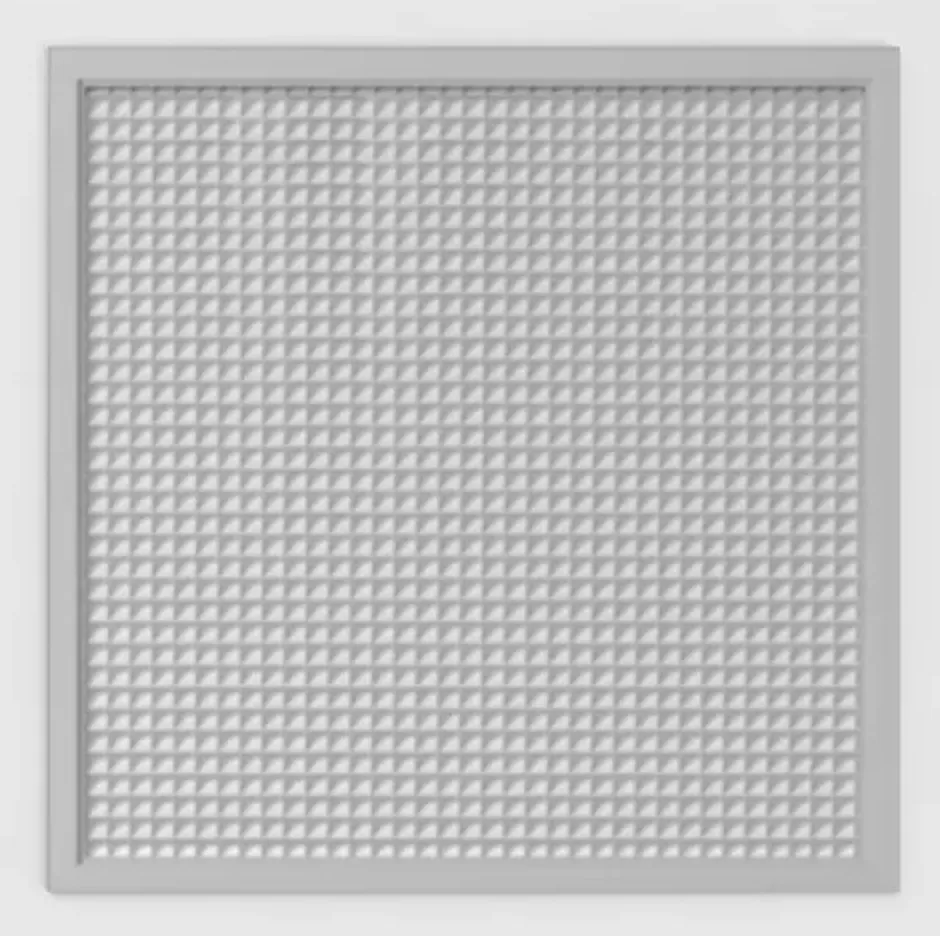
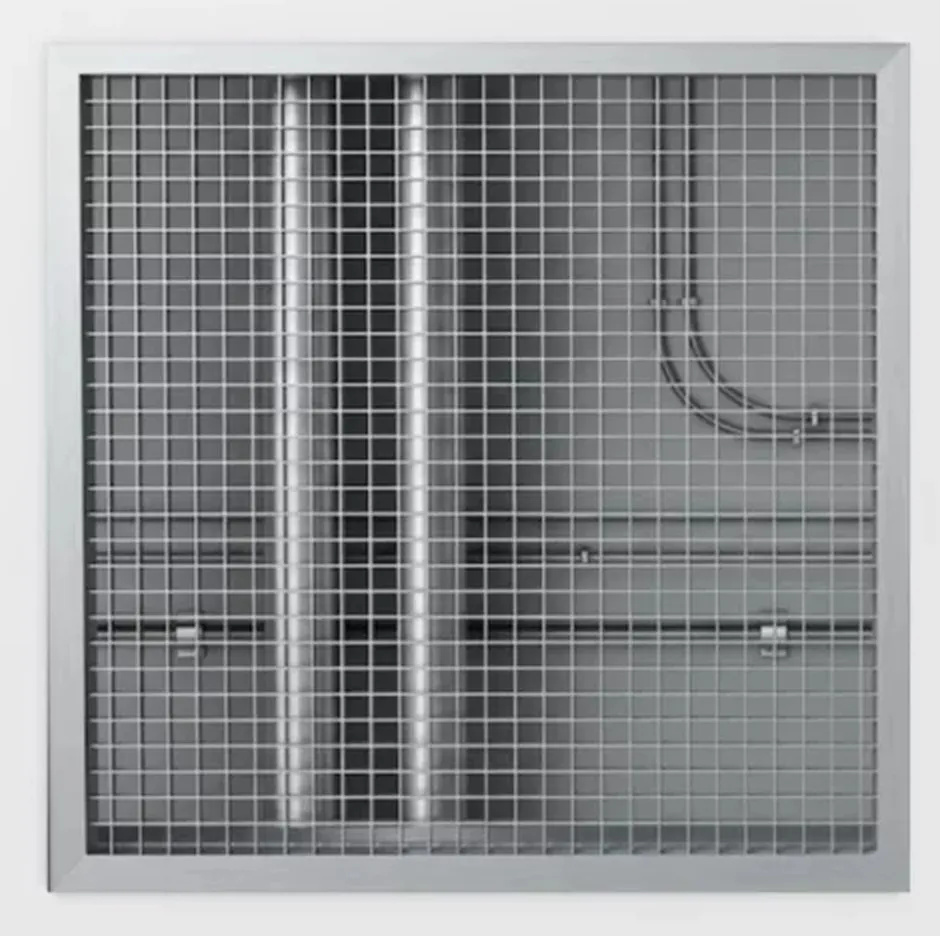
A 45° core screens the plenum from some viewing angles. Hold the sample above eye level and rotate it to check the view from a doorway, table or reception desk before fixing the blade orientation on the drawing.
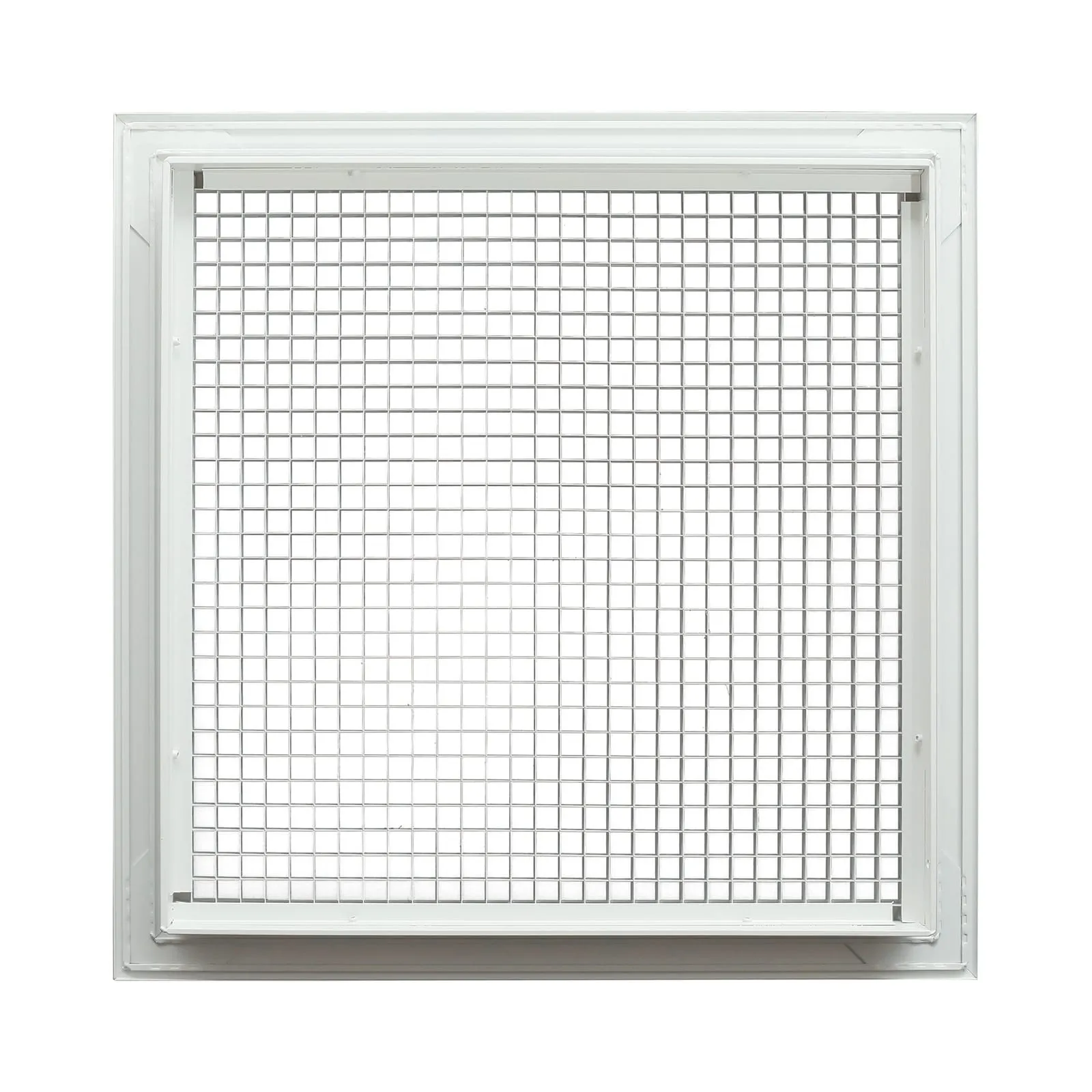
Fixed, removable, hinged, round, and unframed versions are listed together in the egg crate grilles and cores family.
Unframed Model ECC sheets and standard cell options
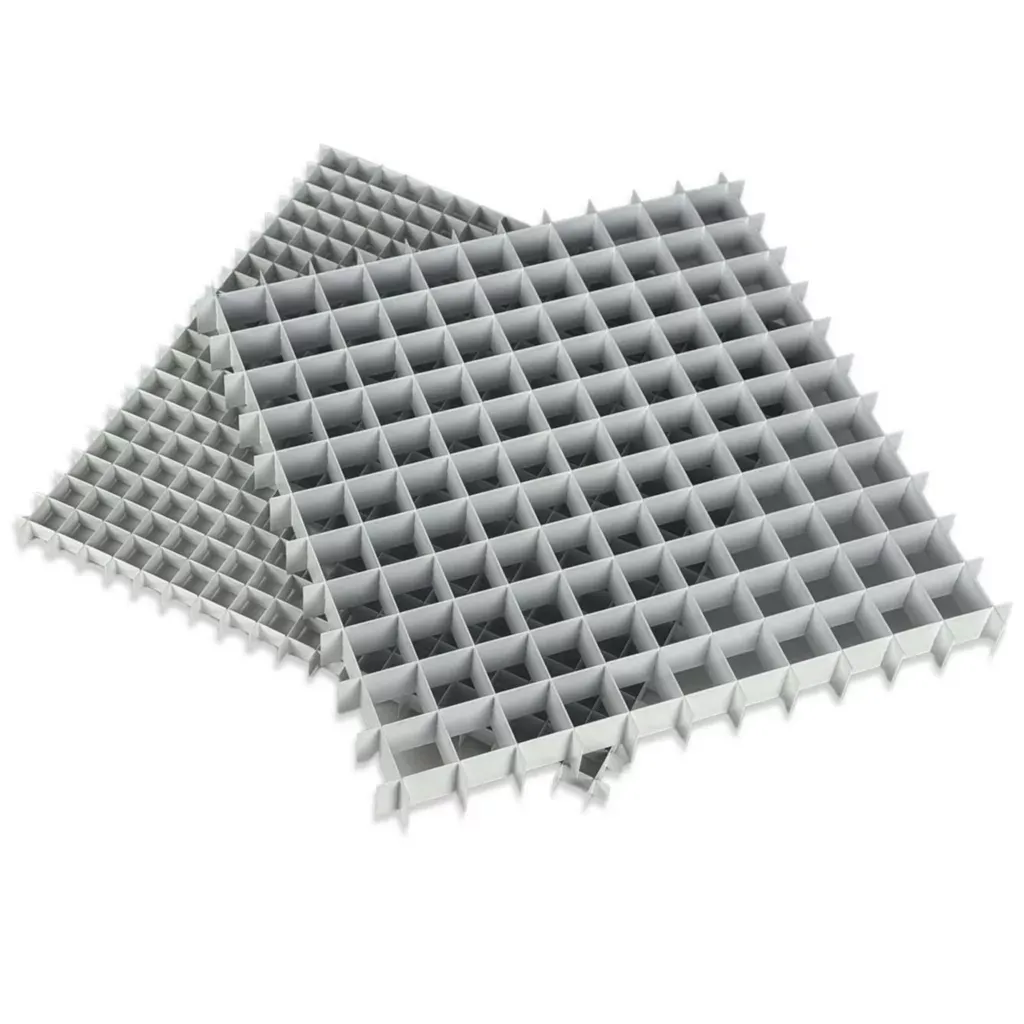
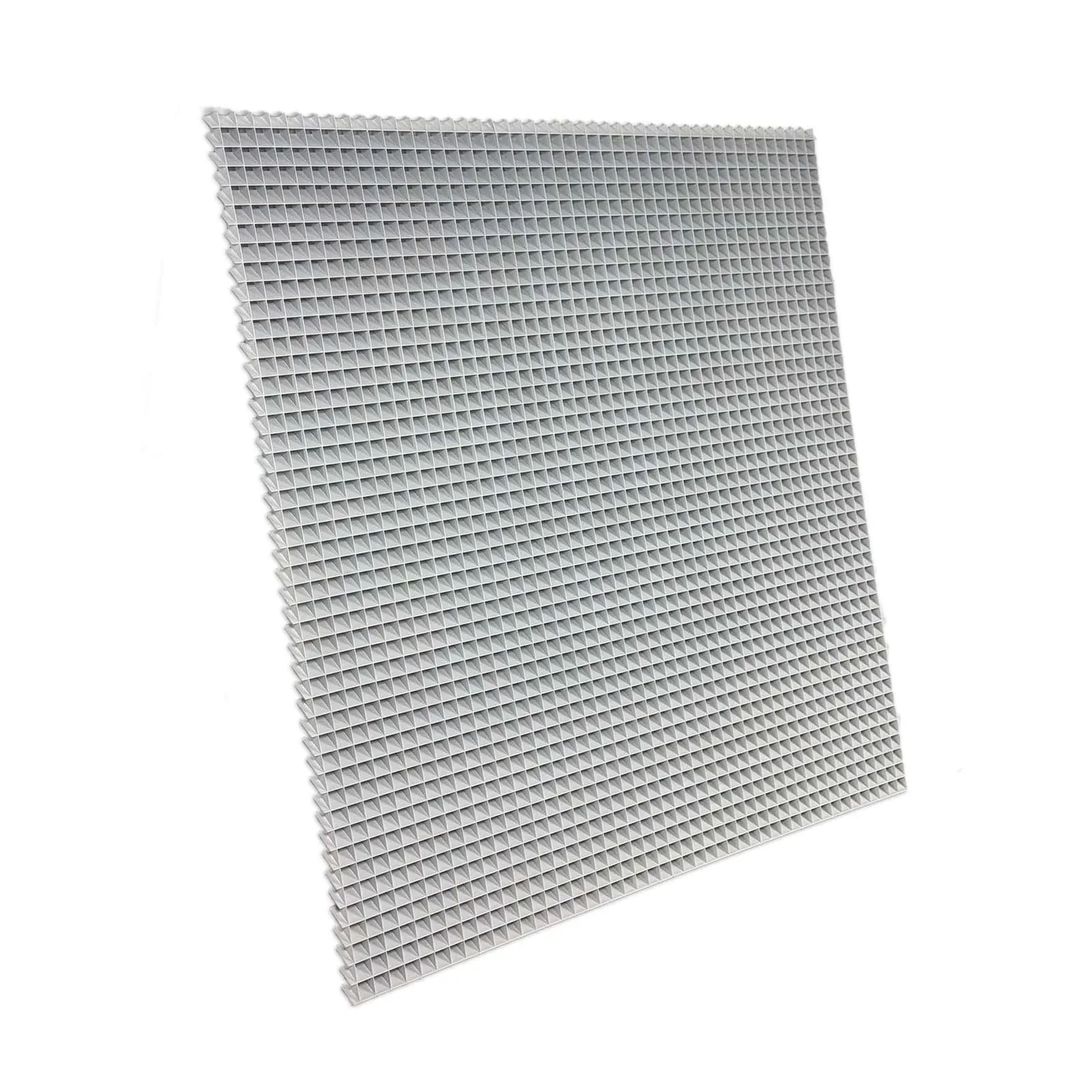
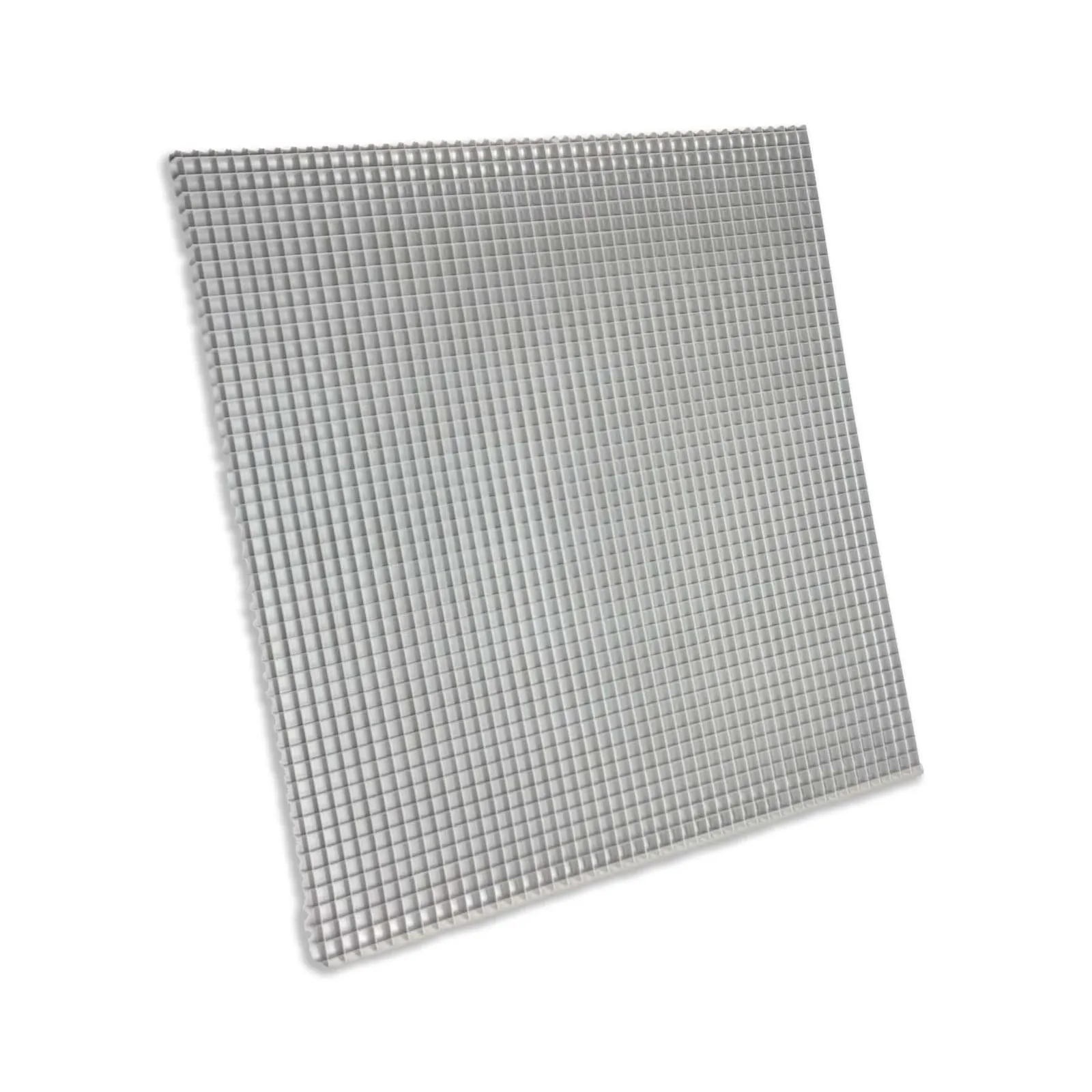
Projects that build custom ceiling frames, lighting diffusers, or laser-cutting machine beds often skip flanged frames altogether. Jianpin supplies raw interlocked panels (Model ECC) up to 1220 mm x 1220 mm, either as full sheets for shop shearing or cut to opening dimensions before packing.
| Configuration | Cell size | Strip thickness |
|---|---|---|
| Standard 0° | 1/2 x 1/2 x 1/2 in. (12.7 x 12.7 x 12.7 mm) | 0.5, 0.4, or 0.35 mm |
| Angled 45° | 1/2 x 1/2 x 1/2 in. (12.7 x 12.7 x 12.7 mm) | 0.5 mm (sightline screening) |
| Medium 0° | 0.59 x 0.59 x 1/2 in. (15 x 15 x 12.7 mm) | 0.5 mm |
| Deep 0° | 0.59 x 0.59 x 0.59 in. (15 x 15 x 15 mm) | 0.5 mm |
| Wide 0° | 1 x 1 x 1 in. (25.4 x 25.4 x 25.4 mm) | 0.5 mm |
What to confirm before quoting
Note the opening or sheet dimensions, blade angle (0° or 45°), strip gauge, and finish (mill or powder coat), along with core access and any rear damper or filter frame on framed units. Our Foshan engineering desk can confirm tolerances and cut sizes directly when you send a schedule.
Products in this guide
On this page
4 sectionsMore from Jianpin
 Jun 11, 2026Vetting an HVAC Air Distribution OEM FactoryGuides
 Feb 07, 2025Choosing Air Grilles and Diffusers by Room Layout and Ceiling TypeGuides
 Feb 06, 2025Using Duct and Drywall Access Panels to Cut Maintenance ReworkGuides
 Feb 06, 2025What to Check on an Air Grille or Diffuser Sample Before OrderingGuides · AI illustration