

Vetting an HVAC Air Distribution OEM Factory
GuidesPublished Updated
A supplier sends a white grille for approval. It fits the opening, the corners sit flat, and you sign off the finish. Before placing the order, ask to see how the factory will check the five hundredth grille against the one on your desk.
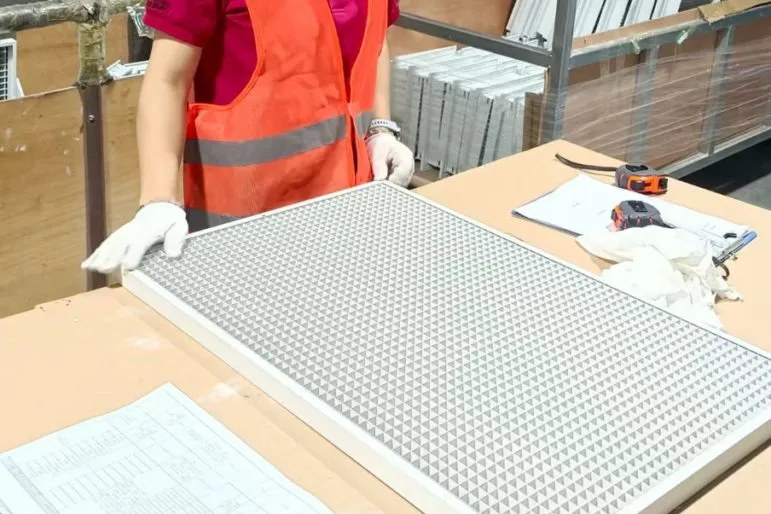
Who cuts, forms and coats the parts?
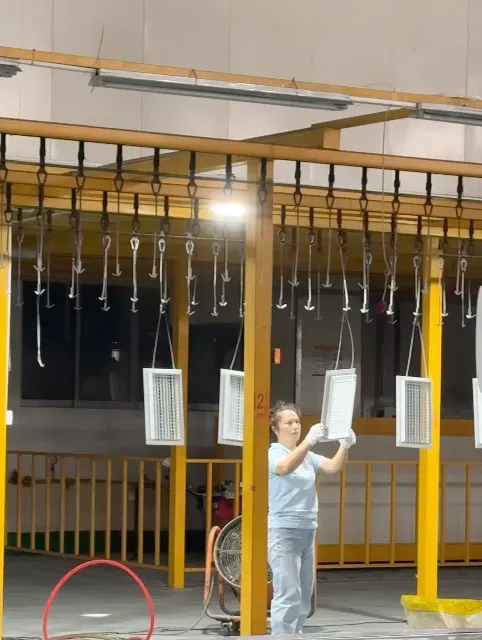
Ask which operations are done at the plant and who signs off work sent elsewhere. If another shop coats the frames, write down the powder reference, the finish sample it receives and who approves a change.
Ask for a live video walkthrough or site visit covering raw material storage, cutting, punching, welding, assembly, pretreatment, powder coating, and packing. Enough floor space to run parallel lines matters too: a rush batch of galvanized dampers should not stall aluminum grille forming. Equally useful is confirming that your drawing questions go straight to production engineers rather than through layers of sales brokers.
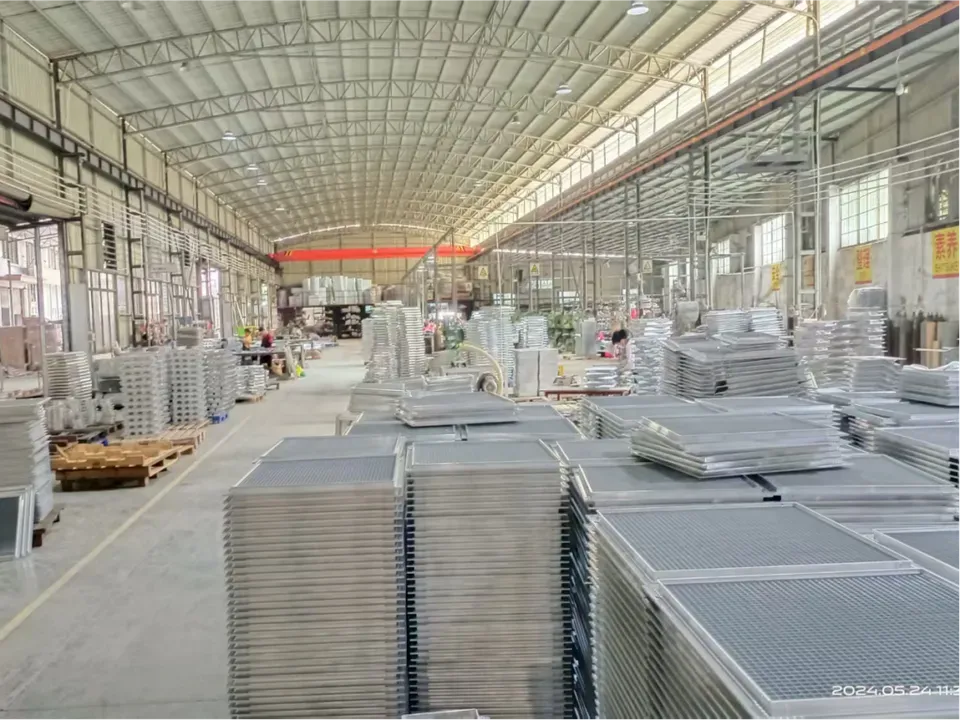
Follow the approved sample into production
Ask the inspector to pull a frame from a finished batch. Compare its miter joints, wall thickness and coating with the signed sample. The inspection record should identify both the drawing revision and the order.
| Stage | What to verify on an audit | Common failure if skipped |
|---|---|---|
| Incoming | Aluminum alloy grade, coil or profile thickness, and flatness | Twisted frames and thin louvers that vibrate in service |
| In-process | Cut-length tolerance, miter fit, and degreasing before paint | Open corner gaps and flaking powder coat after installation |
| Outgoing | Neck and face dimensions, RAL color and gloss check, damper motion | Mismatched white shades across ceiling runs or binding blades |
Can grilles and dampers ship together?
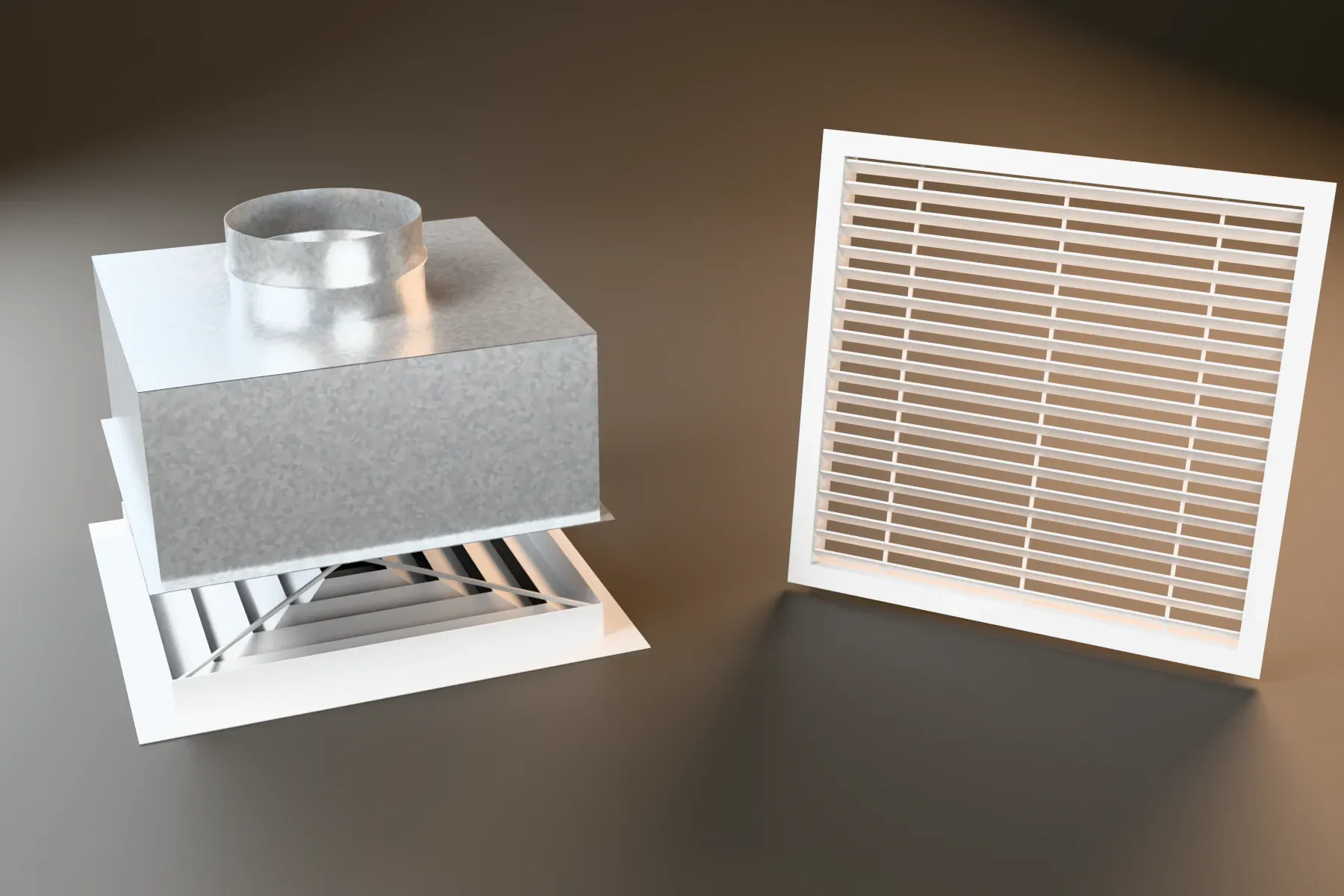
Distributor replenishment rarely stops at a single grille SKU. A typical container mixes square ceiling diffusers, linear slots, return grilles, opposed blade dampers, plenum boxes, and access panels. Splitting those lines across several small workshops multiplies color standards, lead times, and consolidation fees. Use the product catalog to mark the models needed, then ask which can be coated and shipped together.
Put CAD prototyping and custom die ownership in writing
Commercial schedules routinely call for non-standard drywall openings, metric-to-imperial conversions, or proprietary linear slot frames. Confirm that the plant has an in-house engineering desk that reads CAD drawings, flags fit issues early, and turns around physical prototypes before tooling locks. If your brand pays for custom extrusion dies, put exclusivity and archival storage in writing so repeat orders months later match the original profile.
Audit packing protection and container loading
Bulky HVAC hardware penalizes weak packing twice: unprotected painted borders scratch in transit, while poorly nested cartons leave you paying ocean freight on empty space. Ask how the packing line uses corner guards and inner wraps on visible faces, and whether they plan nesting and stacking across a 40HQ container before production finishes. Confirm private-label carton printing, barcode labels, frame stamping, and in-house export paperwork (invoice, packing list, Certificate of Origin) up front.
Jianpin runs these stages inside a 20,000 m² ISO 9001 plant in Nanhai, Foshan, including a 5,500 m² in-house powder-coating shop, and has shipped export containers since 2005. See how parts move through the Foshan factory.
On this page
5 sectionsMore from Jianpin
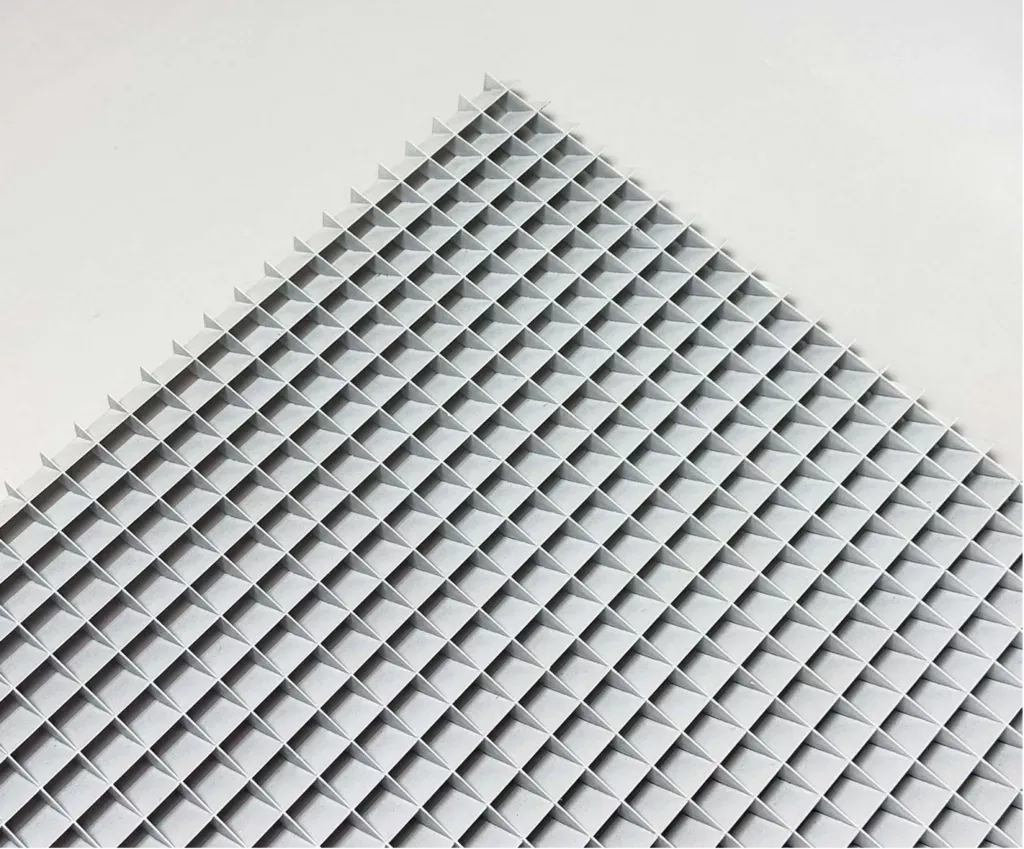 Jun 16, 2026Aluminum Egg Crate Grilles: 90° Straight vs. 45° Angled CoresGuides
 Feb 07, 2025Choosing Air Grilles and Diffusers by Room Layout and Ceiling TypeGuides
 Feb 06, 2025Using Duct and Drywall Access Panels to Cut Maintenance ReworkGuides
 Feb 06, 2025What to Check on an Air Grille or Diffuser Sample Before OrderingGuides · AI illustration